
Brief History of the Diocese of Limerick

Though the shadowy figure of the seventh century St. Munchin is its patron, the Diocese of Limerick actually dates from the twelfth century when its boundaries were laid down at the Synod of Rathbreasail.
The beginnings of the diocese
 It is unlikely that any diocesan structure existed prior to Rathbreasail; rather, the local bishops would simply have been members of monastic communities in the area. While they would have had some prestige deriving from their office, it was the abbots who held power and were administrators of the church system. The Vikings were primarily responsible for the establishment of the diocesan system in Ireland. Indeed, the city of Limerick played a leading role in that development through the work of its first bishop, Gilbert. Initially, he was consecrated as bishop for the city and subsequently took charge of the diocese when it was formed in the year 1111. One of the most remarkable features of the diocese is that its boundaries have not changed significantly since that time. They were in turn based on an older territorial division, a Munster sub-kingdom ruled by the Ui Fidgente kings. On his death in 1145, Gilbert was succeeded by Bishop Patrick, who may have been of Viking ancestry, probably taking the name at his consecration. The next bishop, of whom we have record, is Brictius. He took part in the Synod of Cashel in 1172 and represented Limerick at the third Lateran council in 1179. It is of interest that he travelled to Rome with St. Laurence O’Toole, the first canonised Irish saint.
The Black Book of Limerick
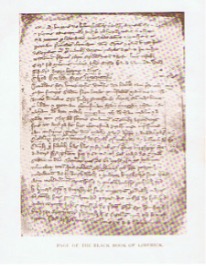 The Black Book of Limerick, a manuscript of various medieval documents relating to the diocese, provides valuable information for that period. In 1201 an enquiry was held into the ecclesiastical property of the diocese. The jury who conducted this survey was made up equally of Irish, Norman and Viking members indicating the cosmopolitan nature of the diocese at that time. This invaluable list of early thirteenth century churches is printed and discussed in Begley’s History of the Diocese. In the taxation return for 1302 we learn for the first time that the diocese had been divided into deaneries and the proxy tax of 1418 gives another list of churches which affords a valuable comparison with the situation in 1201. It is to Cornelius O’Dea, bishop from 1400 to 1426, that we are indebted for the two great treasures of the diocese, the O’Dea mitre and crozier. He was also responsible for the compilation of the Black Book, which was returned to its rightful home in the diocese during the recent episcopate of the late Bishop Newman.
Changes after the Reformation
At the Reformation, Bishop John Quin, a Dominican of Kilmallock friary accepted the limited changes of King Henry VIII, as his successor Bishop William Casey did the Lutheran system of Edward VI. Following the restoration of papal links under Queen Mary, Casey was dismissed and Hugh Lacy, a member of the prominent Co. Limerick Anglo-Norman family was appointed bishop. He remained in office until 1571, when he was removed by Queen Elizabeth and William Casey was restored as bishop. It is from this date that the final cleavage occurred and henceforth there were to be separate bishops for the catholic and anglican dioceses. Bishop Lacy died in 1580 and two years later the Holy See appointed Cornelius O’Boyle as bishop. He was then in Spain, where he appeared to have remained until his death in 1597.
The history of the 1600's
 Limerick was without a bishop for a further twenty years until Richard Arthur, who had been vicar general, was appointed. On his death in 1646, he was buried in St. Mary’s Cathedral which had come into catholic hands during the Confederate wars of the 1640’s. His successor, Dr. Edmund O’Dwyer, undertook a re-organisation of the diocese and his report to Rome in 1646 gives a valuable insight into the situation of the diocese at that time. He survived the charge of the city by Ireton in 1650 and after the surrender escaped to Brussels, where he died in1654. The difficult Cromwellian period was followed by a more tolerant approach after the restoration of Charles II. In 1677 a new bishop, Dr. James Dowley was appointed. Two years later he sent an optimistic report to Rome on the state of the diocese. Education was flourishing, with schools in every parish and a weekly sermon on Sundays. He established two confraternities and visited each parish in the diocese, regularly ordaining priests. Even during the brief persecution occasioned by the Popish Plot, he was not hindered in his episcopate and lived until 1685, which year saw the catholic monarch James II ascend the throne. Dr. James O’Moloney was transferred from the see of Killaloe to Limerick in 1689. However, he left for the continent before the 1690 siege, leaving the administration of the diocese in the hands of his cousin, Dr. Matthew Moloney and Dr. James Stritch; vicars general during the tumultuous period of the sieges and subsequent treaty of 1691.
From the 1700's to today
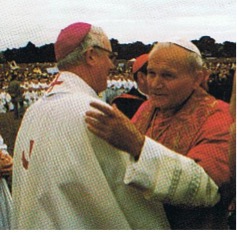 The diocese was again without a bishop during the early years of the eighteenth century when much anti-catholic legislation was passed by the Irish parliament. A new bishop, Dr. Cornelius O’Keeffe, was eventually appointed in 1720 and managed to administer the diocese successfully despite the legal restrictions. In the 1780’s, during the episcopate of Dr. Conway, a report to Rome on the state of the diocese demonstrates that the church did not suffer as severely under penal legislation as is often supposed. The diocese was divided into four decanates each presided over by a vicar forane who held a conference of its priests once a month. The forty parishes of the diocese each had a chapel with at least basic facilities and there was no shortage of priests. The mass rocks of popular folklore were clearly not the normal location for the mass. The chapels in the five city parishes were larger and more ornate. There were no convents of nuns and the report notes with concern, the refusal of some clerical students to return to the diocese after ordination at the continental colleges. In 1825, Dr. John Ryan from Tipperary, was appointed coadjutor bishop with right of succession to the elderly and infirm Charles Tuohy. The grant of Catholic Emancipation in 1829 revitalised the church in the diocese and during the long episcopate of Bishop Ryan and those of his successors, Bishops Butler and O’Dwyer, there were major programmes of church building, parish reorganisation, liturgical innovation and spiritual renewal. Their record of achievement and commitment to the diocese has been continued and expanded by their twentieth century successors: in our own time, by Bishops Murphy, Newman and Murray – in the see established by Gilbert nine centuries ago.
The diocesan logo explained
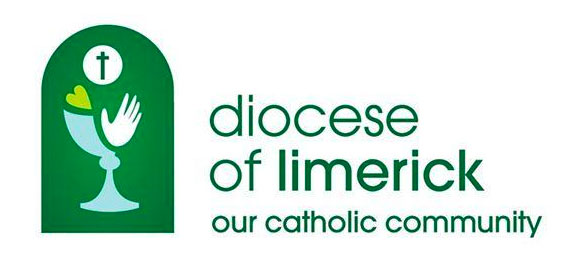
Symbols: the chalice and host
The chalice and eucharistic host are used as they are immediately evident sacred icons which represent elements of the eucharist. The chalice also has strong associations with the Limerick region and in particular Ardagh. The abstract heart shape is a more modern version of the traditional symbol which represents love, fidelity and constancy.
The hands:
Traditionally the hand is used in religious art to symbolise prayer. One of the mosaics in the chapel of the Irish College, Rome, depicts the hands of Our Lady in the traditional orans position, used in icons to denote prayer. In addition, hands illustrate the following qualities to which the Diocese of Limerick aspires;
- Community spirit
- Friendship
- Support
- Togetherness
- Unity
The window:
The classical Romanesque style window - readily recognisable for its religious associations - was chosen to frame the symbols of the new logo. At once, the window adds a unity and clarity to the diocesan logo.
The colours:
Green, the primary background colour used, was chosen to represent Limerick.
Green also represents nature and balance.
Complimentary colours are introduced to the design to represent the many communities and cultures included in the Diocese of Limerick.
The blue of the chalice represents a calm and peaceful support.
The use of three very distinct colours echoes the Holy Trinity representing the catholic faith of the diocese.
Bishops of Limerick
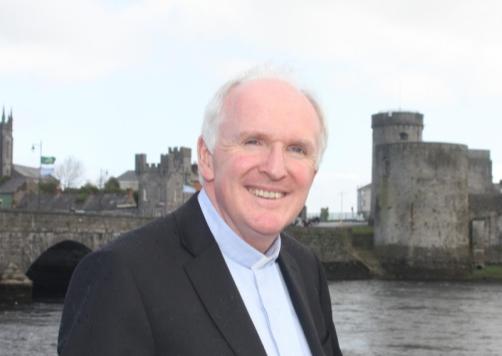
Brendan Leahy (1960-)
Bishop Leahy was born on the 28th of March 1960. He was ordained a Priest on the 5th of June 1986. On the 10th of January 2013, he was appointed Bishop of Limerick and was ordained Bishop on the 14th April 2013 at
St. Johns Cathedral.
Bishop Brendan Leahy was born in the Rotunda Hospital, Dublin on March 28, 1960. He is the third of four children born to Maurice and Treasa Leahy, both of whom originated in West Kerry and were teachers in Dublin (in the 1940s Bishop Brendan’s father taught for a year in Athea, Co. Limerick where he is still remembered for the football skills he exhibited in the local team that won a championship at that time). Though a “Dub”, Brendan realises there is much of Kerry in him as he spent long periods each year in Ballyferriter.
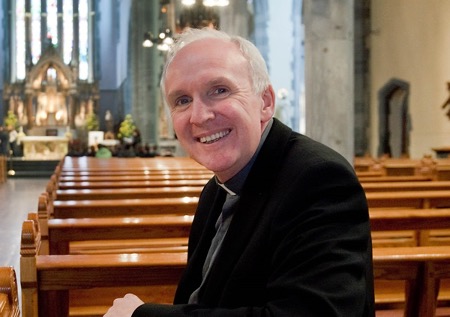
Bishop Brendan’s family lived for several years in Crumlin parish, Dublin, where he was baptised, made his first communion and was confirmed. Though the family moved to Ballyroan, Rathfarnham when Brendan was six years old, he continued to attend St. Damian’s National school in Crumlin where his parents were school principals. In 1970 he took part with a group of other boys from that parish in a week-long summer camp run by the Salesians in Pallaskenry. It was his first time away from home and he enjoyed it greatly.He remembers the Salesians’ kindness, good fun and ability to introduce them to a greater understanding of the Mass. During these early years, Brendan attended the College of Music Chatham Row, Dublin, where he studied music theory and piano.
Brendan attended the local secondary school in Ballyroan, Coláiste Éanna C.B.S. During his school years (1972-1977) he edited a college magazine, took part in school musicals. It was on a school tour that he visited Lourdes in 1973. During these school years his sport was swimming and jogging. Of course, these were also the years of the Dublin-Kerry All-Irelands which were the source of much lively discussion in his family. The parish of Ballyroan was a new, developing parish and Brendan became quite involved in a youth group called RAY(Renewal and Youth), the parish folk-group and summer youth projects.
As he looked to the future after secondary school, he considered the possibility of a career either in teaching, or in journalism or in law. He decided to go to UCD to study law. He enjoyed his Law studies, became a member and then treasurer of the UCD Law Society. He also became involved in Free Legal Aid Centres (FLAC) that saw him go weekly with other Law students to set up clinics in Dublin for the purpose of advising people who couldn’t otherwise afford legal advice.
Brendan took part in some of the activities of the UCD chaplaincy. In particular he helped organise a major college-wide retreat that was hosted by Jean Vanier, son of the Governor General of Canada, philosopher and founder of L’Arche, a movement of communities where people with and without intellectual disabilities share life together in community. Another significant moment at this period of his life was the visit of Pope John Paul II to Ireland. Brendan helped as a steward at the Phoenix Park and was also involved in bringing a group of young people to Galway for the Youth Mass there with the Pope.
During his years in UCD Brendan increasingly felt called to follow Jesus by becoming a priest. It was something he had sensed since his teenage years and now proceeded to act on it. He entered Clonliffe College, Dublin in 1980. He spent the first year pursuing a course in theology, spirituality and psychology at the Mater Dei Institute of Education. He remembers fondly Sr. Bernard Boran, who was his first teacher of systematic theology, from his time there. After this first year he began his studies in philosophy. He was introduced to the famous classical philosophers such as Plato and Aristotle, Augustine and Thomas Aquinas as well as more contemporary thinkers such as Eric Voegelin and Bernard Lonergan, Albert Camus and Martin Heidegger. At this time, too, he studied for the Bar in King’s Inns and was called to the Bar in 1983. During these first years in the seminary, Brendan deepened his contact with the Focolare Movement that he had come to know. This became a very important influence in his life. It is an International Movement, founded by a young lay woman Chiara Lubich and her companions during the Second World War. Its focus is on putting the Gospel into practice and contributing to building a more united world in accordance with Jesus’ last will and testament: “May they all be one”.
Having completed his philosophical and legal studies, Brendan was sent to Rome to continue his study of theology (1983-1991). He lived firstly at the Irish College and then the Portuguese College. Rome was a wonderful experience of the universal Church. He attended the Jesuit-run Gregorian University, leading to his Doctoral award for his research supervised by the Spanish theologian, Angel Anton, on the theme of the Marian principle in the Church in the writings of Hans Urs von Balthasar, a Swiss theologian. During this time too, Brendan spent long periods in Germany, in particular three months at the Ecumenical Centre, Ottmaring, near Augsburg. Among his lecturers at the Gregorian were the Jesuits Gerald O’Collins, John O’Donnell, Jared Wicks, Philip Rosato, Angel Anton, Francis O’Sullivan, Rene Latourelle, John McDermott, Antonio Orbe, Edward Kilmartin, Thomas Buckley, Ugo Vanni, René Fisichella. During these years in Italy he was also able to deepen his contact with the Focolare community as well as others new movements and communities present in Rome.
In 1991, Brendan was appointed to Clonskeagh parish, Dublin, the Church of the Immaculate Conception. He remembers very fondly and with great gratitude the kindly and wonderfully pastoral parish priest Msgr. Michael Browne who had been one of the major figures in Ireland in establishing what would become ACCORD. During his stay in Clonskeagh, Brendan became chaplain to the German school.
After a brief year there he was appointed to the staff of Clonliffe College and of Mater Dei Institute of Education. This brought him into contact with many candidates for priesthood as well as many young men and women preparing to be teachers of religion at second level. For a brief period in 1995-1996 he also helped out in Sutton parish in Dublin. These were dynamic years for the Mater Dei Institute that was to become in 1999 a college of Dublin City University. When he became Registrar in Mater Dei in 2004 he worked closely with the Director, Fr. Michael Drumm, a classmate of his from Rome and Msgr. Dermot Lane, President of the college. Previously, he had also worked with Sr. Marcellina O’Sullivan, a Presentation sister, whose kindness he recalls with gratitude. As registrar, Brendan led the quality review and quality promotion unit of the college. Part of his duties as Registrar was also membership of the standing committee of the Academic Council of DCU.
When Clonliffe College closed in 1999, Brendan continued on the staff in Mater Dei while also acting as a parish chaplain in Lusk parish. Among his duties in Lusk was to help in the preparation of children who were making their confirmation. In 2004 Brendan went to live in the Focolare Centre, Prosperous, Co. Kildare where he was to remain until 2013. He was appointed professor of Systematic Theology at St. Patrick’s College in 2006.
Since the mid 1990s Fr. Brendan has been very involved in ecumenism at both a diocesan and national level. This was the context where he got to know Bishop Trevor Williams who was involved in the Corrymeela community. Brendan became chairperson of the Dublin Diocesan Advisory Committee on Ecumenism, secretary of the Bishops’ Conference’s Advisory Committee on Ecumenism and a member of the Inter-Church Meeting. He also cofounded, along with Rev. Dennis Cooke, Methodist and then Principal of Edgehill College, Belfast, a programme of studies in theology for Catholics and Protestants entitled “Exploring Theology Together”. For several years in the 1990s Fr. Brendan was confessional lecturer at the Irish School of Ecumenics. He has attended and spoken at various meetings and conferences on ecumenism. He is currently co-chair of the Theology Forum of the Inter-Church Meeting. From 2007-2012 Brendan was a member of a team from the Vatican’sPontifical Council for Promoting Christian Unity in conversation with the Salvation Army. In recent years, Fr. Brendan has engaged in inter-religious dialogue, becoming a member of the Three Faiths Forum of Ireland and, more recently, working towards the establishment of an Inter-Religious Council in Dublin.
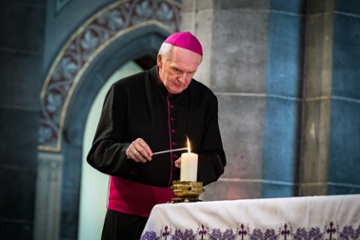 Fr. Brendan is a member of the Pontifical Theology Academy since 2004. He has written many articles and books on themes such as peace and forgiveness, faith questions, ecumenism, new movements and communities, Mary, Church, priesthood, historical treasures of Ireland and spirituality. He is a member of the Focolare Movement’s International Study Centre. Since 2009 he has been a visiting lecturer at the Sophia University Institute, Loppiano, Florence. He enjoys the international dimension of the student body there.
Brendan’s mother passed away in 2001 and his father passed away in 2013. Brendan enjoys walking, going to the gym and occasionally getting to the cinema. Above all, he enjoys the company of good friends.
As a member of the Irish Bishops Conference, Bishop Leahy is Chair of the Commission for Catholic Education and Formation, of the Council for Catechetics and of the Advisory Committee on Ecumenism. He is currently Co-Chair of the Irish Inter-Church Committee. He is President of Veritas, the Bishops Publishing Company. In 2018 he became the chair of the section on inter-religious dialogue of the Commission of Evangelization and Culture of the Council of European Bishops’ Conferences.
Bishop Brendan is the Chair of the Board of Trustees and Chair of the Governing Authority of Mary Immaculate College. He is also the Chair of the Board of St. John’s Hospital, Limerick. He is a Trustee of St. Patrick’s College, Maynooth. He is a Deputy Chairperson of the Steering Committee of the Irish Synodal Pathway launched by the Irish Bishops Conference in March 2021.
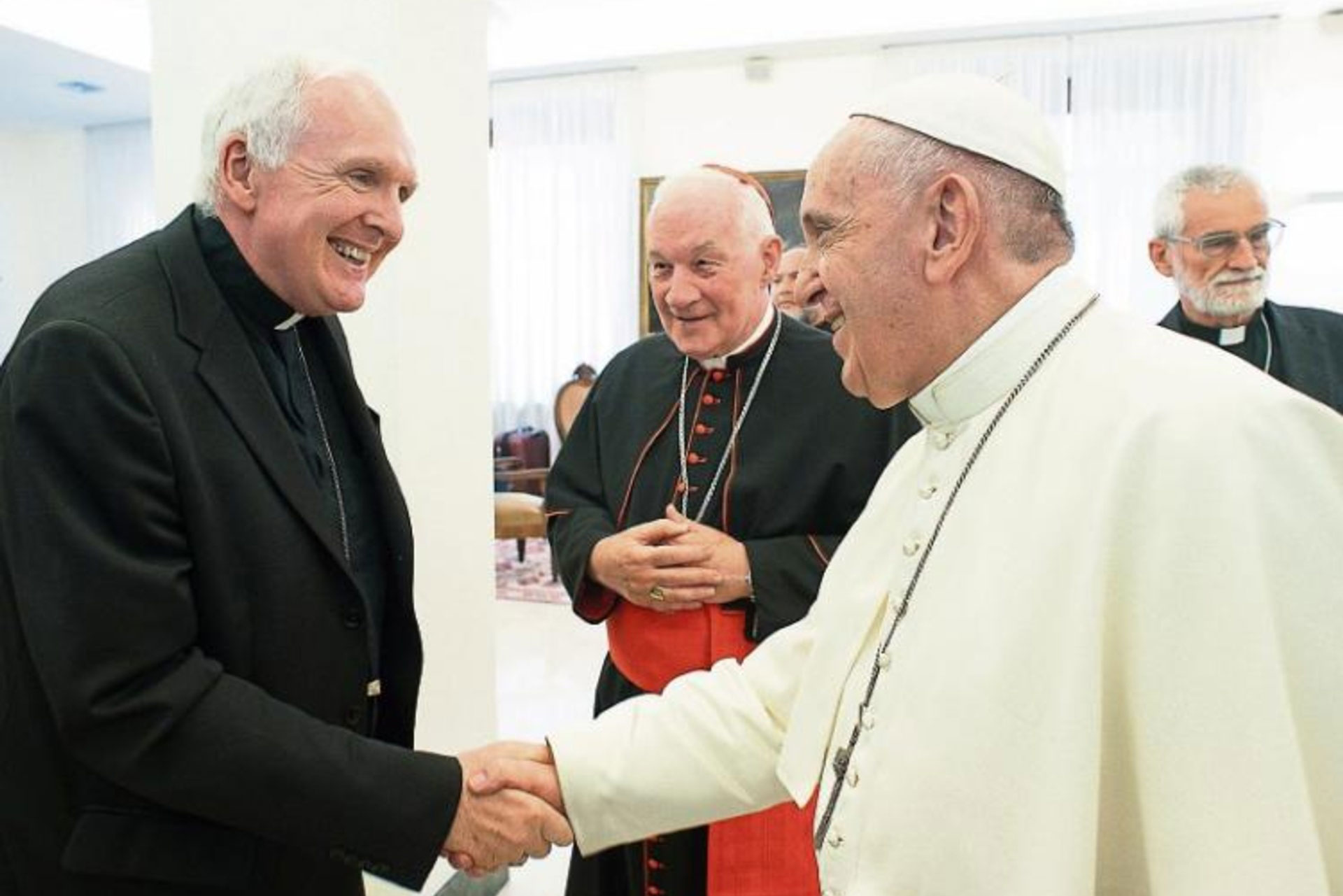
In the Irish Bishops Conference, Bishop Brendan is a member of the Standing Committee, Chair of the Council for Catechetics, Chair of the Commission for Catholic Education and Formation and Chair of the Advisory Committee on Inter-religious Dialogue and a member of the Advisory Committee on Ecumenism. He is President of Veritas Company. Bishop Brendan is a member of the European Conference of Bishops Conference (CCEE)’s Commission on Evangelisation and Culture. In September 2021 Pope Francis nominated him a member of the Congregation for Catholic Education.
Tony Mullins - Diocesan Administrator (1959- )
The Very Rev. Tony Mullins was born on the 20 April 1959 and is a native of Ardagh parish. He studied in St. Patrick’s College, Maynooth, from 1977 to 1983.
On the 12 June 1983, he was ordained in Ardagh and sent on loan to the Archdiocese of Armagh, where he was appointed C.C., St. Peter’s, Drogheda, Co. Louth.
He returned to Limerick and was appointed C.C., St. Mary’s, on the 12 November 1984 and appointed spiritual director of St. Munchin’s College in March 1985. In July 1987, he was appointed C.C., St. John’s and remained as spiritual director in St. Munchin’s College.
On the 2nd of September 1995, he was selected as Adm. St John’s Cathedral and on the 19th of August 1998, he was appointed V.F. of the newly-created vicariate of St. John’s.
In 1999, he took a sabbatical, Renewal for Ministry, at All Hallows. On the 21st of September 2000, he was appointed diocesan secretary, taking on the role of diocesan financial administrator in 2001.
On the 4th of September 2004, he was appointed Parish Priest of Dromin/Athlacca, continuing on a part-time basis as diocesan secretary until December 2005. In March 2009, he was appointed a Pastoral Area Leader (Vicar Forane).
Elected by the Limerick diocesan college of consultors to administer the diocese pending the appointment of a bishop, Fr. Mullins confirmed his acceptance of the post of Diocesan Administrator and notified the Apostolic Nuncio on the 22 December 2009.
Video:
Fr Tony Mullins delivers the homily at the Episcopal Ordination of Bishop Leahy in April 2013
Bishop Emeritus Donal Murray (1940- )
Bishop Murray was born in Dublin in 1940, attended Blackrock College, Dublin, obtained his B.A. and Masters in Philosophy at U.C.D., his B.Div. at Maynooth and his License and Doctorate in Theology at the University of St Thomas, Rome.
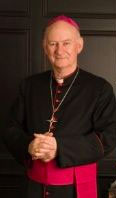 He was ordained a priest on 22 May 1966 and lectured extensively in theology and ethical issues. He began lecturing in Mater Dei Institute of Education in 1969, becoming Professor of Moral Theology at Clonliffe College in 1970. In addition to the above positions, from 1973 to 1982, he lectured on Cathechetics in U.C.D. and from 1978 to 1982, he lectured in Medical Ethics in U.C.D.
Bishop Murray is a well-known author in the areas of theology, ethics and social issues, having written numerous books and articles, booklets and pamphlets. In 1982, at the age of 41, he was appointed Auxiliary Bishop of Dublin. At that time, he was the youngest member of the Irish hierarchy. His advice and opinion is highly valued.
He served as advisor to the Irish representatives at the World Synod of Bishops 1977. He is a member of the Vatican’s Council for Culture and was a member of four episcopal commissions. He is the moving force in the joint Commission for Bio-Ethical Issues for the Bishops’ Conferences of Ireland, England, Wales and Scotland.
He attended the European Synod of Bishops in Rome in Autumn 1999 on behalf of the Irish hierarchy.
Bishop Murray resigned as Bishop of Limerick in December 2009.\
Click here to view some of Bishop Murrays Pastoral Letters.
Click here to view Bishop Murrays latest publications.
Click here to view Bishop Murrays Homilies offering reflections on the experience of Lourdes
Jeremiah Newman (1926-95)
Born at Dromcollogher, Co. Limerick, he followed the educational paths of his predecessors, in St. Munchin’s College, Limerick and St. Patrick’s College, Maynooth.
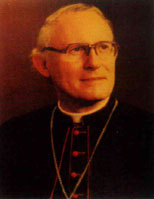 Ordained in June 1950, he went to Louvain for post graduate studies. After a year as a lecturer in Queen’s University, Belfast, he was appointed to the staff of St. Patrick’s College, Maynooth.
He became president of the college in 1967 and was the driving force behind its development as a lay university, as well as a seminary.
A prolific writer and lecturer in philosophy and sociology, he was appointed bishop in 1974 and consecrated on 14 July of that year.
Controversial in many areas of political debate, he was a leading member of the hierarchy during his years as bishop.
He died on the 3rd of April, 1995 and is buried in St. John’s Cathedral.
Henry Murphy (1912-73)
Born in Ardpatrick, Co. Limerick, he too was educated at St. Munchin’s College and St. Patrick’s College, Maynooth.
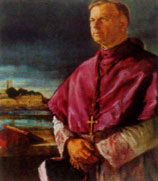 Ordained in June 1936, he joined the staff of St. Munchin’s College after he had completed his post graduate studies. For twenty years he taught at the college before his appointment as bishop in 1958.
His episcopate focused on two major works in the diocese, the building of the new St. Munchin’s College and the creation of the Limerick Social Service Centre.
For many years he was Secretary of the Irish Episcopal Conference and he attended all the sessions of the Second Vatican Council.
He died on 8 October 1973 and is buried in Mount St. Lawrence beside his predecessor.
Patrick O'Neill (1891-1958)
Born at Grange, Fedamore, Co Limerick, he was educated at St. Munchin’s College, Limerick and St. Patrick’s College, Maynooth.
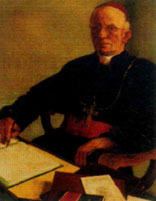 Ordained priest in June 1915, he returned to Maynooth to prepare for a Doctorate in Divinity. He was appointed to the staff of Maynooth and held the post of Professor of Moral Theology before becoming vice-president of the college in 1936.
He became PP Bruff and St. Munchin’s before he was appointed bishop in December 1945.
He was consecrated bishop of Limerick on 24 February 1946. Bishop O’Neill prepared the ground for the development of St. Munchin’s College and moved the bishop’s residence to Kilmoyle.
Despite being a shy person he was the driving force behind a great deal of diocesan work.
He died suddenly in Kilmoyle on 26 March 1958 and is buried in the priests' plot in Mount St. Lawrence, cemetery.
David Keane (1871-1945)
Born at Ballyagran, Co. Limerick he was educated in St. Coleman’s College, Fermoy, St. Munchin’s College, Limerick.
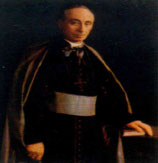 He attended St. Patrick’s College, Maynooth, where he was ordained in June 1895, the centenary of the foundation of the college.
After the ordination, he served in the diocese of Portsmouth, before joining the staff of St. Munchin’s College.
After eleven years as president of the college, he was appointed PP Glin in 1920. On the death of Bishop Hallinan, he was consecrated bishop in March 1925. B
ishop for twenty one years, he died on 13 March 1945 and is buried in St. John’s Cathedral.
Denis Hallinan (1849-1923)
A near contemporary of Bishop O’Dwyer, he was born in the parish of Coolcappagh, Co. Limerick in 1849.
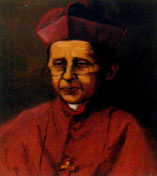 Educated at the Irish College, Rome, he was ordained in 1874. He served as CC in the parishes of Newcastle West and St. Michael’s, before becoming Adm. of St. Michael’s and eventually PP of St. Mary’s in 1895.
He was appointed PP Newcastle West in 1898 and nominated bishop twenty years later, on 10 March 1918. His episcopacy was short lived but he was involved in a number of sensitive political issues.
He introduced the Salesians to Limerick, both the priests and sisters. He died on 2 July 1923 and is buried in St. John’s Cathedral.
Edward Thomas O'Dwyer (1842-1917)
Born at Holy Cross, Co. Tipperary, he was educated at the C.B.S. in Limerick and at St. Patrick’s College, Maynooth, where he was ordained in June 1867.
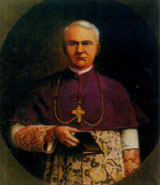 Having served as CC in Rathkeale, Bruff, St. Patrick’s Adare, Newcastle West and St. Michael’s, he was appointed bishop in May 1886.
One of the most famous Irish bishops of the late nineteenth century, he was also one of the most controversial.
Honoured by Pope Leo XIII for his part in the Plan of Campaign, he ended his life with approval from his people for his stand against General Maxwell in the wake of the 1916 Rising.
He is buried in St. John’s Cathedral.
George Butler (1815-86)
Born in Limerick on 13 February 1815, he was educated at St. Munchin’s College, and ordained a priest from St. Patrick’s College, Maynooth, on 26 November 1838.
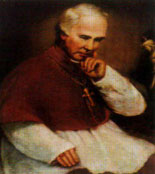 His first appointment was as in Trinidad, in the West Indies, where he spent two years before returning to Limerick to become CC St. Patrick's.
Appointments to St. John’s and St. Michael’s followed; he was appointed coadjutor of the diocese and consecrated on 25 July, during the first public ceremony to be held in the new cathedral.
He became apostolic administrator of Limerick in1863 and bishop on the death of Dr. Ryan on 4 June 1864.
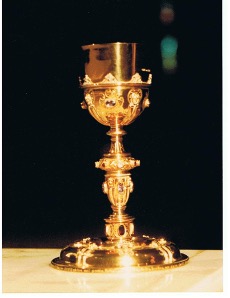
His time as bishop saw the discovery of the Ardagh Chalice, the loan of the Black Book of Limerick to Maynooth, the building of the tower of St. John’s Cathedral and the erection of many churches and schools.
He died on 3 February 1886 and is buried in St. John's.
John Ryan (1784-1864)
John Ryan was born in Twomileborris, Co. Tipperary in November 1784.
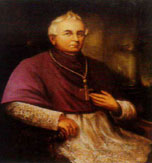 He studied at St. Patrick’s College, Maynooth, where he was ordained in June 1810.
His time in his native diocese of Cashel and Emly is somewhat uncertain due to many men in that diocese with the Ryan surname.
It is generally accepted that he was PP Doon before his appointment as PP Mullinahone from which he was nominated coadjutor Bishop of Limerick on 17 March 1828, with the death of Bishop Tuohy.
He was bishop for thirty six years, during which he built St. John’s Cathedral and many other churches in the diocese.
He died in 1864 and is buried in front of the main altar in the cathedral.
Charles Tuohy (1754-1828)
Charles Tuohy was born in Nicholas Street, Limerick, in 1754.
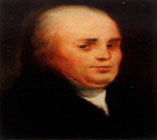 He studied at the Irish Colleges in Toulouse and Paris. Ordained in Paris in 1780, he continued his studies, receiving a Doctorate in Divinity in 1784.
He returned to Limerick that year and was appointed a curate in St. John’s Parish. In 1796, Bishop Young appointed him to Newcastle West.
After ten years he was appointed PP Rathkeale and subsequently went to St. Michael’s in 1812.
On the death of Bishop Young, he was appointed Bishop of Limerick. He was a tireless worker in Limerick and also on the national political and ecclesiastical scene.
He died in Newtown Villa, his residence in Sexton Street, on St. Patrick’s day 1828 and is buried in the same tomb as his predecessor, Bishop Young.
John Young (1746-1813)
He was born in John’s St., Limerick, in March 1746 into a merchant family.
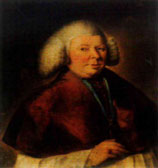 Educated in Limerick and at the Pastoral College of the Irish, Louvain, where he received an M.A. and a Ph.D., he was ordained in Louvain on 23 September 1769.
He worked in Limerick city until he was appointed PP in Bruff in 1782. Nine years later he went as PP to St. Mary’s and became dean of the cathedral chapter.
On 3 January 1793, he was appointed coadjutor to the Bishop of Limerick, and later bishop in 1796.
One of his priorities as bishop was the opening of St. Munchin’s College, Palmerstown, in November 1796.
He was deeply involved in local politics at the end of the eighteenth century and was well known on the national stage.
He died on 22 September 1813, at Park House, Corbally and is buried in St. Patrick’s cemetery, off the Tipperary road.