

Personnel & Roles

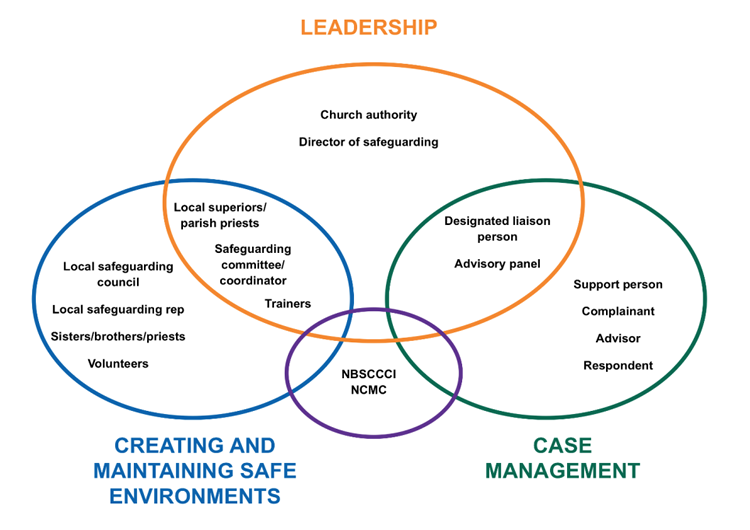
The diagram below shows the structure for key personnel involved within child safeguarding in the Catholic Church in Ireland.
A similar structure is replicated across each Diocese/Church body in Ireland. Descriptions for each role are displayed in this appendix, while also being referenced and expanded on in each relevant standard.
Roles
Advisor
To promote safeguarding by:
- Keeping the respondent informed of the process of the case
- Helping direct the respondent to counselling and support
- Recording any meetings or contact they have with the respondent, and reporting to the DLP as appropriate
- Upholding the seven standards in practice and behaviour
Advisory Panel
To promote safeguarding by:
- Advising the Church authority on all stages of the investigative process into alleged child abuse
- Keeping a record of all of its recommendations to the Church authority
- Upholding the seven standards in practice and behaviour
Bishop
To be responsible for all safeguarding practices by:
- Ensuring that the appropriate child safeguarding structures and personnel are in place
- Liaising with the Holy See, as appropriate. If the Church body is a religious order or congregation, this is done through the superior general
- Ensuring compliance with canon and civil law
- Upholding the seven standards in practice and behaviour
Designated Liaison Person (DLP)
To promote safeguarding by:
- Hearing child safeguarding concerns
- Passing on child safeguarding concerns to the statutory authorities
- Managing cases and all associated documents
- Liaising with the support person, advisor and the Church authority
- Passing on child safeguarding concerns to the NBSCCCI
- Conducting internal inquiries
- Contributing to upholding the seven standards in practice and behaviour
- Completing an annual report regarding compliance with Standards 2, 3 and 4 for the Church authority
- Monitoring respondents or, with the Church authority, appointing a suitable person to carry out this role
Director of Safeguarding
To be responsible for coordination of all safeguarding practices by:
- Directing and implementing the child safeguarding policy
- Liaising with and supporting parishes and communities to ensure implementation of local policies and procedures
- Liaising with the child safeguarding committee and the advisory panel
- Ensuring that all child safeguarding personnel are kept up to date with practice, as communicated from the NBSCCCI
- Reporting directly to the Church authority on all child safeguarding issues
Leaders of Youth Ministry
Role: To ensure that safe practices and codes of behaviour are maintained, and that all safeguarding concerns are addressed within Diocesan policy and procedures
Leaders of Youth Ministry must:
- Complete the application form (Appendix 6)
- Complete Garda vetting
- Complete the prescribed one-day safeguarding training programme every three years
Local Safeguarding Representative (LSR)
Being responsible to the parish priest or local superior to promote child safeguarding by:
- Raising awareness of what child safeguarding is
- Disseminating information regarding the standards and guidance, and circulating this information widely
- Ensuring Church activities are provided in a way that ensures the safety and well-being of the children involved
- Ensuring that the contact details of the DLP, Gardaí and Tulsa are widely publicised
- Upholding the seven standards in practice and behaviour
National Board for Safeguarding Children in the Catholic Church in Ireland (NBSCCCI)
Performs its child safeguarding role by:
- Assisting with the development of policy, procedures and practices across the Catholic Church in Ireland
- Offering advice on best practice, including training, case management and implementation of national standards and guidance
- Monitoring the practice of child safeguarding across the Catholic Church in Ireland
National Case Management Committee (NCMC)
Integral to child safeguarding:
- Vetting – The Legislative Basis
- The NCMC exists as a function of NBSCCCI, and is chaired and administered by its staff
- The NCMC functions as an all-island group, offering advice to Church authorities on all aspects of the investigative process into alleged abuse (including the areas listed under the role of the advisory panel on Page 109)
- Membership is agreed through the signing of a data processing deed, which allows the sharing of full information with the NCMC and is fully compliant with data protection legislation in both jurisdictions
To find out more about the current composition of the group, please log on to the NBSCCCI website at www.safeguarding.ie
Parish Safeguarding Representative:
- Delivering information sessions (if appropriate) to personnel who have been identified by the safeguarding committee. To deliver this training, Local Safeguarding Representatives must be trained by a trainer who is registered with the NBSCCCI
- Contributing to the training needs analysis carried out by the safeguarding committee
- Supporting good safeguarding practice in the parish
Sacristan
Role: To ensure that the sacristy protocol is adhered to and that safe practise and codes of behaviour are maintained and all safeguarding concerns are addressed in compliance with Diocesan policy and procedures. Sacristans must:
- Complete the application form (Appendix 6)
- Complete Garda vetting
- Complete the prescribed one-day safeguarding training programme every three years
Safeguarding Committee
To promote child safeguarding by:
- Developing a three-year child safeguarding plan, including the establishment of the local child safeguarding policy and procedures
- Coordinating local safeguarding representatives (LSR’s)
- Coordinating activities related to child safeguarding, e.g. training
- Ensuring the annual audit, including the correlation of records for training-related activities
- Ensuring the completion of training needs assessments across the various child safeguarding roles in the Diocese/Church body
- Ensuring, with the Church authority, that the appropriate child safeguarding personnel are in place
- Upholding the seven standards in practice and behaviour
Safeguarding Trainers
To promote child safeguarding by:
- Working with the safeguarding committee to identify training needs
- Delivering full-day and information-session safeguarding training to those identified by the safeguarding committee in the Diocese/Church body
- Keeping records of all of those who have been trained
- Contributing to upholding the seven standards in practice and behaviour
Support Person
To promote safeguarding by:
- Keeping the complainant informed of the process of the case
- Helping direct the complainant to counselling and support
- Recording any meetings or contact they have with the complainant, and reporting to the DLP as appropriate
- Upholding the seven standards in practice and behaviour
Support Persons
The Diocese maintains a Panel of Support People who are available to support a person making a complaint of abuse by Catholic Church personnel and to help in identifying and accessing support.
Details are available from the Director of Safeguarding, Diocesan Centre, St. Munchins, Corbally, Limerick. Phone: 061 350000 – 087 3233564